The Cleaning Method That Actually Works
The most effective way to remove mold and mildew from siding without damage is a simple oxygen bleach or diluted chlorine bleach solution paired with a soft-bristle brush and some patience. Here's the straightforward version:
Mix your solution. For chlorine bleach, a ratio of 1 part bleach to 3 parts water is the standard starting point. Oxygen bleach (like OxiClean) is a gentler alternative that's safer for plants and landscaping — mix according to the package, apply generously, and let it dwell.
Wet the siding first. This sounds counterintuitive, but pre-wetting prevents the cleaning solution from soaking in unevenly and reduces the risk of streaking or discoloration, especially on painted or stained wood.
Apply and let it sit. Give the solution 10–15 minutes to do its work. You'll often see the mildew start to loosen or change color. Don't let it dry on the surface — if it's a hot day, work in smaller sections.
Scrub gently, rinse thoroughly. A long-handled soft-bristle brush lets you work without a ladder for most of the lower sections. Scrub in the direction of any grain or lap lines, then rinse well from top to bottom. Residue left behind can attract new growth faster.
What Not to Do
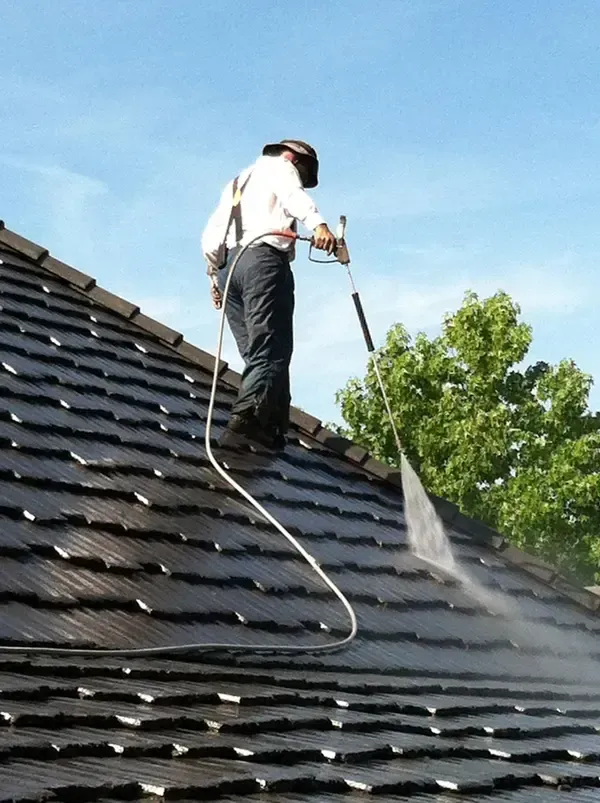
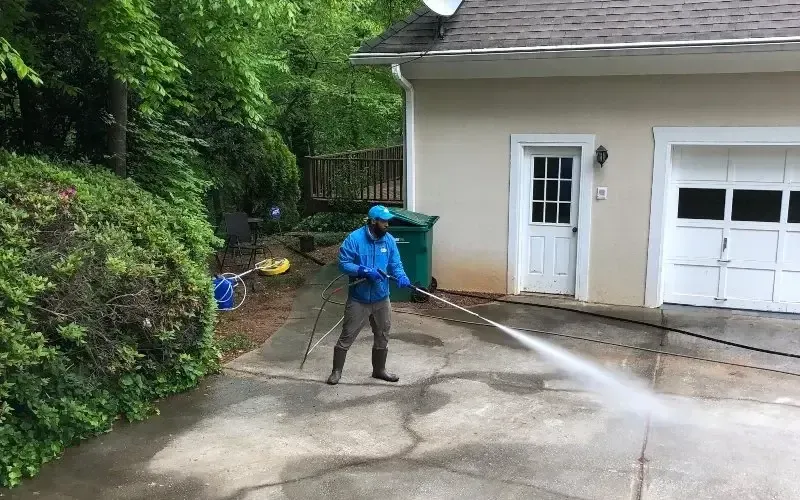
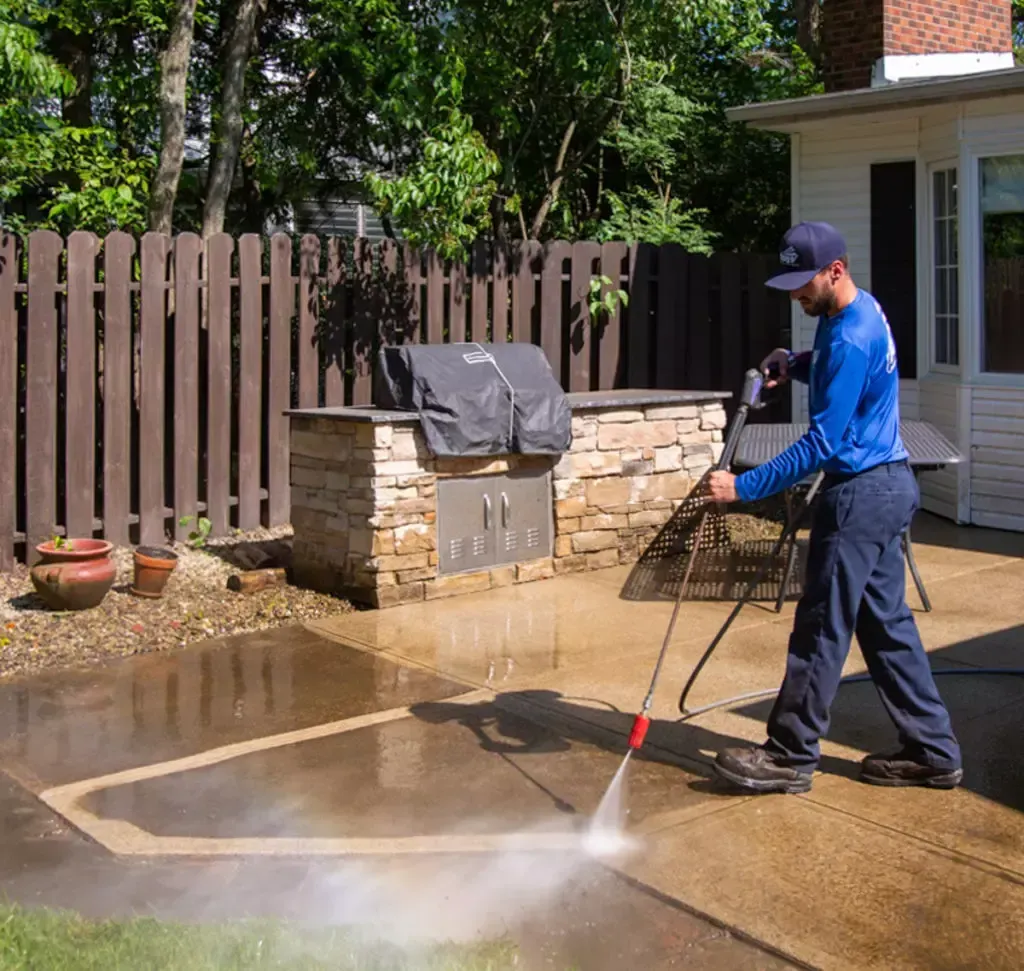
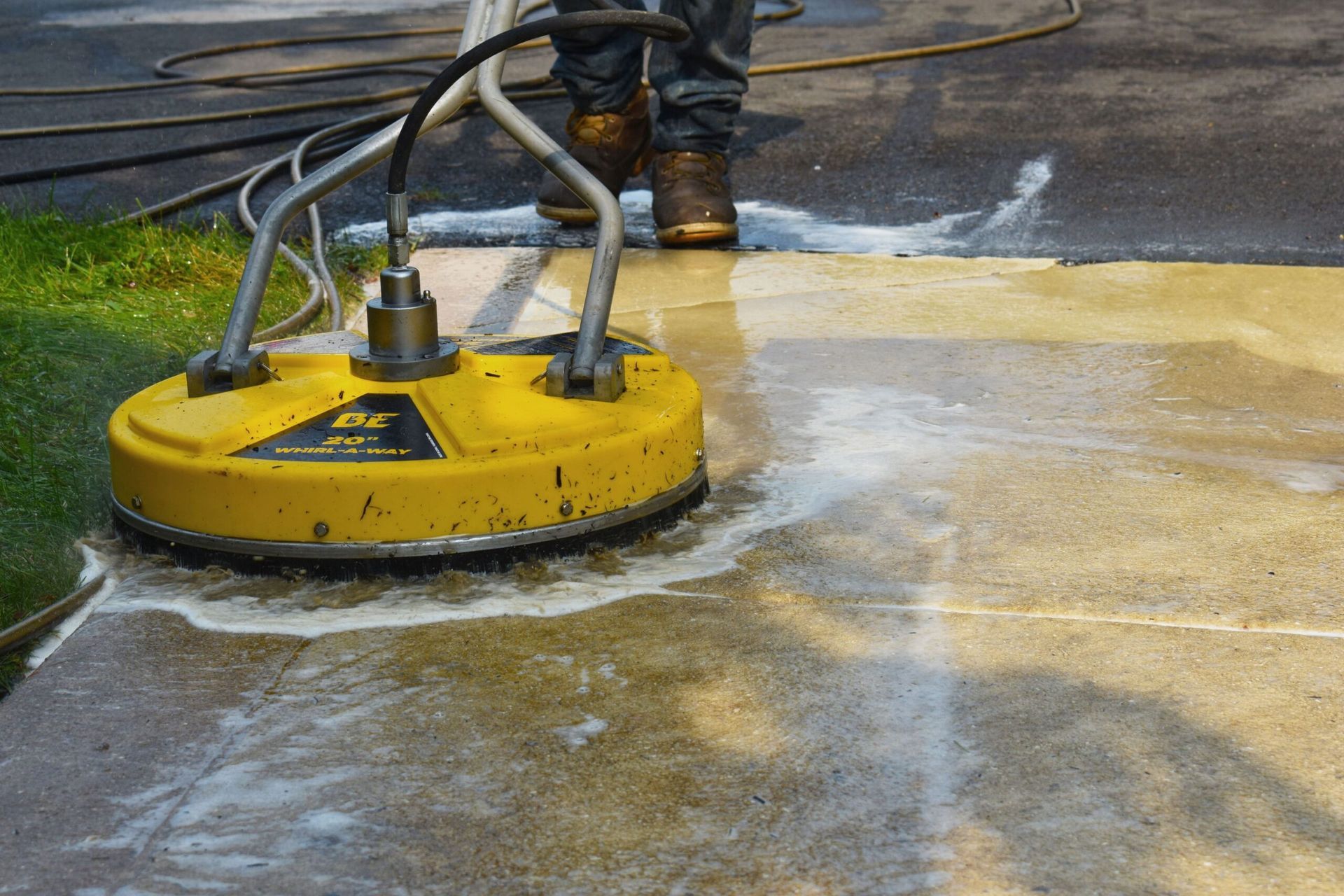
Pressure washing is the most common mistake people make. It feels efficient, but high pressure drives water up behind lap siding, can force moisture into wood, and strips paint or erodes softer materials like fiber cement and vinyl if the nozzle is too close or the pressure is too high. If you do use a pressure washer, keep it on a low setting (under 1,500 PSI), use a wide fan tip, and angle it downward — never up under the laps.
Straight bleach is another one to avoid. Undiluted, it can bleach the color out of painted surfaces, kill surrounding plants, and corrode metal fasteners. The diluted solution works just as well without the collateral damage.
And don't skip the rinse. Bleach residue that lingers on siding can break down paint over time and leave a dull, chalky finish.
A Few Material-Specific Notes
Vinyl siding is pretty forgiving — the diluted bleach method works well, and you can use a car-wash brush on a pole to cover ground quickly without scratching.
Wood and hardboard need a lighter touch. These materials absorb moisture more readily, so work fast, rinse completely, and make sure the surface dries fully before you consider any repainting. If the wood itself looks gray and weathered underneath the mildew, that's oxidation — a separate issue that needs sanding and a fresh coat.
Fiber cement (like HardiePlank) is durable but the paint system can be sensitive. Stick to oxygen bleach rather than chlorine, and keep water pressure low.
Keeping It From Coming Back
Once you've cleaned it off, the goal is to slow the return. Trim back any trees or shrubs that are shading the siding and trapping moisture against it. Make sure gutters aren't overflowing and sending water sheeting down the wall. And if a particular section keeps coming back year after year, a mildew-resistant exterior paint or additive mixed into your next coat can make a real difference.
Knowing how to remove mold and mildew from siding without damage is honestly a once-a-year maintenance task for most homes — an afternoon of work that keeps the exterior looking clean and protects the material underneath for years. The key is catching it before it's been sitting long enough to stain, and using a method that cleans without creating a new problem.