Know your siding material before you do anything

Different siding materials respond very differently to cleaning, and what works perfectly on vinyl can ruin fiber cement or wood. This is the first thing to sort out before mixing any solution or pulling out equipment.

Vinyl siding is the most forgiving — it's non-porous, doesn't absorb moisture, and handles most cleaning solutions without issue. Fiber cement siding is more sensitive because it can absorb water and cleaning chemicals if the paint layer is compromised. 


Wood siding requires the most care of all — harsh chemicals can raise the grain, strip paint, or cause swelling and warping if the wood stays wet too long. Engineered wood products like LP SmartSide fall somewhere in between and usually have manufacturer-specific cleaning recommendations worth following.

If you're not sure what your siding is made of, that identification is worth the two minutes it takes before you start.


estimated_quoteArtboard 3

Get a Free Quote

Contact Us

Everything You Need to Know Before Pressure Washing Your Deck

The cleaning solution that actually works

The most effective way to remove mold and mildew from siding without damage is a diluted bleach solution applied with low pressure and given time to work before rinsing. The standard mix is one part household bleach to three parts water, with a small amount of dish soap added to help the solution adhere to the surface rather than running straight off. This combination kills the mold and mildew at the root rather than just scrubbing the surface appearance away — which matters, because mildew that's been scrubbed but not killed tends to come back faster than it appeared in the first place.

Apply the solution with a soft-bristle brush, a garden sprayer, or a low-pressure pump applicator — not a pressure washer at this stage. Work from the bottom of the affected area upward, which sounds counterintuitive but prevents streaking from dirty runoff flowing over already-cleaned sections. Let the solution sit for five to ten minutes, then scrub gently if needed and rinse thoroughly from top to bottom with a regular garden hose.

For wood or fiber cement siding where bleach is a concern, oxygen bleach — sold as OxiClean or similar products — is a gentler alternative that's effective on mildew without the risk of discoloration or paint damage that chlorine bleach can cause on more sensitive materials.


Where pressure washers fit in — and where they don't

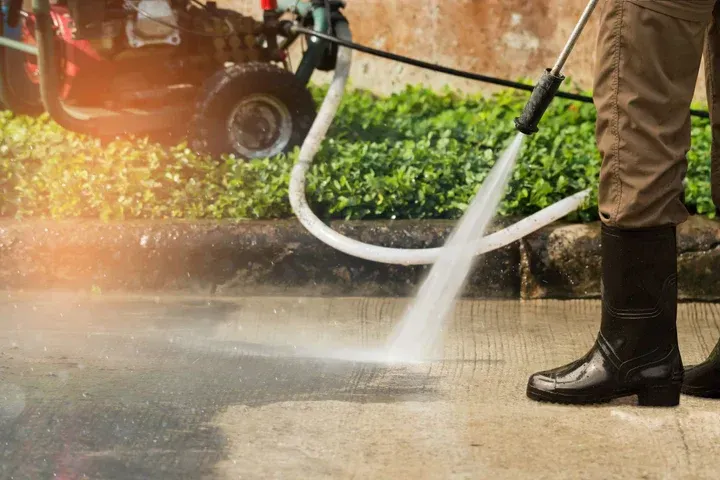
Pressure washing gets recommended for siding cleaning constantly, and it's not wrong advice if it's applied carefully. The problem is that most homeowners don't know that "pressure washing" siding should really be "soft washing" — using a pressure washer at very low PSI, around 1,200 to 1,500 maximum, with a wide-angle tip that diffuses the spray. At that setting, a pressure washer is basically just a powerful garden hose, which is fine for rinsing.

Where it goes wrong is when people use the narrow-tip attachments or crank up the pressure to blast stubborn stains. That approach drives water behind siding panels, strips paint from wood and fiber cement, and can crack or dent vinyl if held too close. For removing mold and mildew from siding without damage, the pressure washer is most useful as a rinse tool after the cleaning solution has done its work — not as the primary cleaning method.

Satisfied Clients

quotes2Artboard 2

Milwaukee Pressure Washing Near Me?

Mold and mildew establish where moisture lingers, which means the areas that stay damp longest — north-facing walls, sections shaded by trees or overhangs, spots near downspouts — will be the repeat offenders. Trimming back vegetation that holds moisture against the siding, improving drainage away from the foundation, and cleaning gutters so they don't overflow onto the wall surface all reduce how frequently you're dealing with the problem.


There are also mildew-resistant additives for exterior paint that help repel new growth between cleanings — worth asking about the next time you're due for an exterior repaint, especially on the shaded sides of the house where the problem tends to concentrate.

A once or twice yearly cleaning routine is all most homes need to stay on top of it. Catch it early when the growth is light and the job is genuinely easy. Let it go for two or three seasons and you're dealing with something that takes significantly more effort — and carries more risk of damage — to fully resolve.