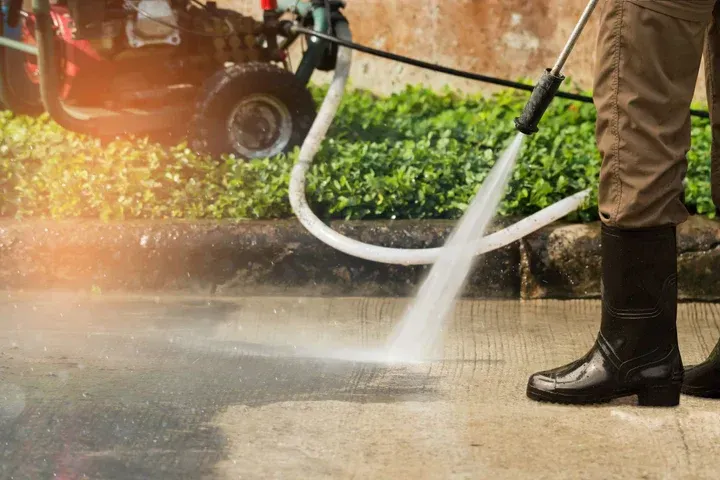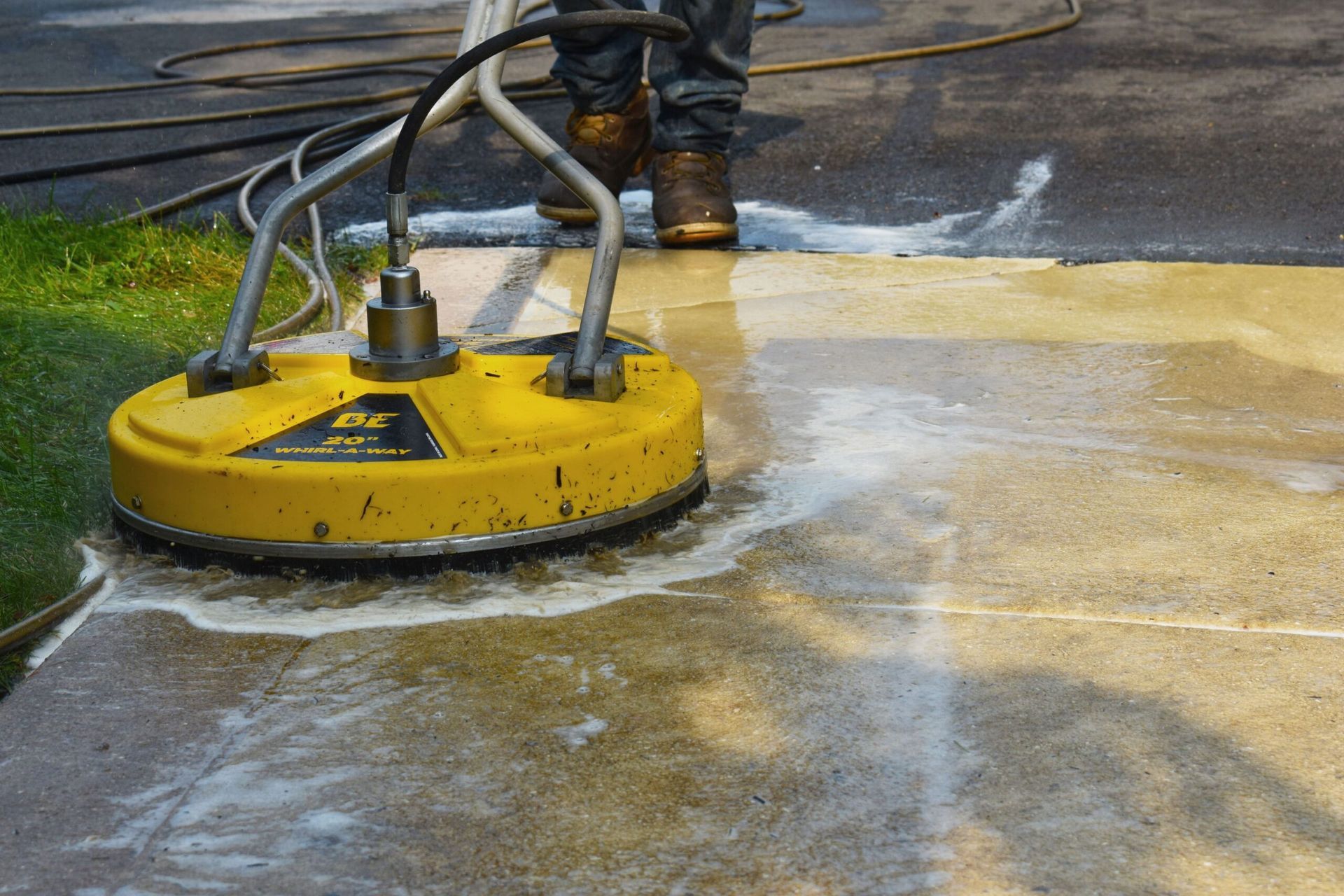
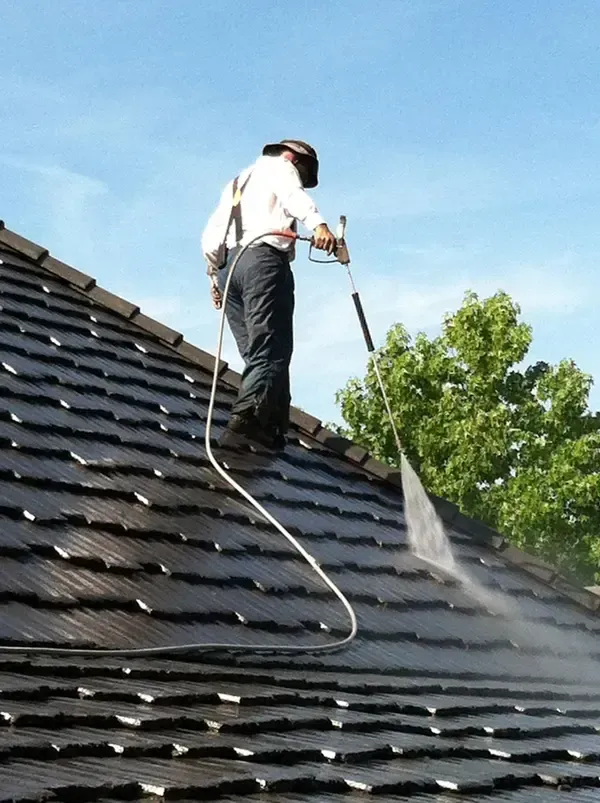
The single most common mistake is using too much pressure. A standard pressure washer can generate anywhere from 1,500 to 4,000 PSI, and the higher end of that range is genuinely too aggressive for most deck wood. Softwoods like pine and cedar — which make up a large percentage of residential decks — are particularly vulnerable. Too much pressure raises the wood grain, leaving a fuzzy, rough surface that's actually more susceptible to moisture damage and staining than the weathered surface you started with.

For most wood decks, 1,200 to 1,500 PSI is the right range. Composite decking is more tolerant but still benefits from staying under 1,500 PSI to avoid surface scuffing. If your machine doesn't allow precise PSI control, distance and tip selection are your adjustment levers — a 25 or 40-degree fan tip held at twelve to eighteen inches from the surface distributes the pressure safely. A zero-degree or narrow-tip attachment concentrates force into a destructive point and has no business being used on deck boards under almost any circumstances.


estimated_quoteArtboard 3

Get a Free Quote

Contact Us

Everything You Need to Know Before Pressure Washing Your Deck

Work with the grain, not across it

The direction you move the wand matters as much as the pressure setting. Always move parallel to the wood grain — along the length of the board, not across it. Cleaning across the grain drives water and grit into the softer early-wood fibers, accelerating the grain-raising problem and leaving visible streaking that's difficult to sand out evenly afterward.

Keep the wand moving at a consistent pace. Pausing in one spot while the trigger is held creates a concentrated blast that etches the wood surface, leaving a visible mark that stands out once the deck dries. This is especially visible on older, weathered decks where the surface has softened over years of sun and moisture exposure.

Overlap your passes slightly so you don't leave dry strips between cleaned sections, and try to complete each board in one pass rather than stopping midway. The transition points between passes are where uneven cleaning shows up most clearly.

Prep and cleaning solutions

What to know about pressure washing a deck includes understanding that water alone often isn't enough for decks with significant mildew, graying, or embedded dirt. A deck cleaner applied before pressure washing — either a dedicated wood deck cleaner or a diluted oxygen bleach solution — breaks down organic growth and embedded grime so the pressure washer is rinsing away loosened material rather than trying to blast everything off by force alone. This combination produces a significantly better result than pressure alone and usually allows you to use lower PSI throughout.

Apply the cleaner, let it dwell for ten to fifteen minutes without letting it dry on the surface, then pressure wash with the grain as described. Rinse thoroughly, including the areas between deck boards where cleaner can pool and sit.

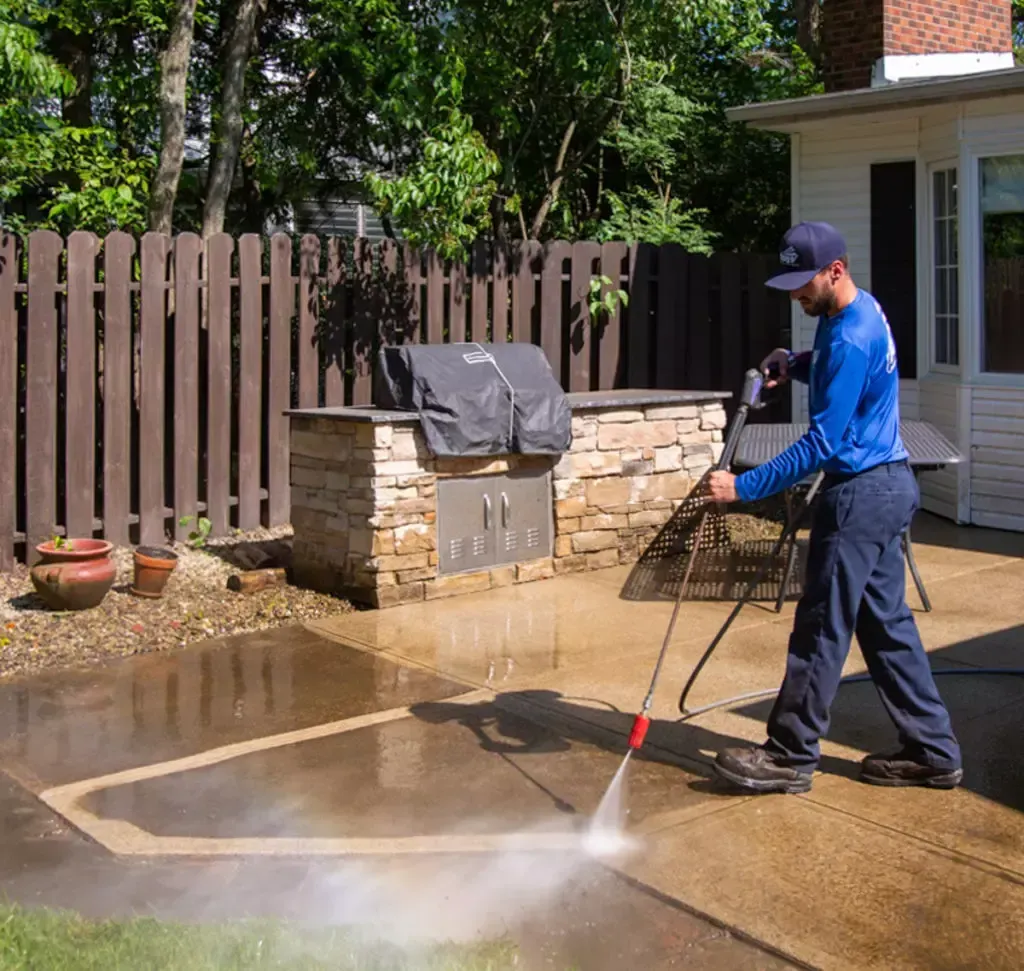
Remove everything from the deck before you start — furniture, planters, grills, doormats. Wet doormats and planters left in place create shadow stains on the deck surface that dry into outlines of whatever you left sitting there. It's an annoying and avoidable problem.

Satisfied Clients

quotes2Artboard 2

Milwaukee Pressure Washing Near Me?

What comes after

A freshly pressure-washed deck needs to dry completely before you apply any stain, sealer, or paint — typically 48 to 72 hours of dry weather, longer in humid conditions. Applying a finish to wood that's still holding moisture traps that moisture under the coating and leads to premature peeling and bubbling, which defeats the entire purpose of the cleaning.

Once dry, run your hand across the boards. If they feel rough or fuzzy from raised grain, a light sanding with 60 to 80-grit paper smooths the surface and opens the wood up to accept stain more evenly. This step is often skipped, and the results of skipping it show up in how patchy the finished deck looks after staining.

Pressure washing a deck properly adds years to its life and genuinely transforms how the whole outdoor space looks and feels. The job isn't complicated, but the details — pressure, direction, prep, dry time — are what determine whether you end up with a deck worth showing off or one that needs more work than when you started.